Tuesday, November 3, 2009
Hiatus
Just FYI: I have tendinitis in both my wrists, and therefore am off computer privileges for a while. I will get back to writing as soon as I am able.


Wednesday, October 21, 2009
The Dark Place

Thanks to my new habit of trailwalking, I have been immersed in a culture of dogwalkers I overlooked when I was running. In my haste to exercise I didn't stop to talk to passers-by, a necessity when one is walking because chatty folks are hard to avoid. I'm naturally anti-social, however there's something comforting in the knowledge that everyone enjoys talking about their dogs. It's a natural icebreaker to comment on the adorable smile of a hopeful border collie.
Recently I've been nodding hello to a new couple in my town, one of whom works in a nearby hospital. In taking notice of my post-op state, they frequently ask after my recovery while throwing a stick for their shepherd. The last time I met them, she spoke of a patient whose hands had been crushed in a rock climbing accident. Having spent a few hours talking with this person at the hospital, she asked how she could help him look toward a future that wasn't bleak and crippled. What could she say?
I was a little startled by the question. Having unexpectedly lived that future, I tried to think of what I would say to myself eleven months ago, and I came up empty. Encouragement is just annoying; a hope that one can grow from tragedy is infuriating; a belief that something better will happen seems impossible. All I could think of was, "Tell him the dark place will pass."
I wanted to tell him that it does pass, but there's nothing you can do to hasten the process. You just have to ride it out and hope that at the end you'll see something better. Or, hope that at the end, you'll have enough strength left to go on.
Then I thought over my answer again, decided that it was too heavy, and told her to advise the young man, while his hands were out of commission, to master voice recognition software.
photo credit: http://farm3.static.flickr.com/2290/1809841427_ac57666503.jpg
Saturday, October 17, 2009
Making the Rounds
 A few months ago, I met the deductible on my insurance plan, and since then I have been racing around to every conceivable doctor to make the most of my nearly-free coverage. Somewhere between the eye doctor and the dentist I started to notice how nice it was to hear that I was totally healthy within a particular specialty - it is a statement I have been fairly used to my entire life but now seems rare. My doctors' appointments were always quick check-ins until the past year. Today, I'm lucky if I make it out in an hour.
Visiting doctors has become a frighteningly easy process. I am a whiz with forms and consider blood tests lunchtime errands. There is a running history of doctor-phobia in my family, which I think I have overcome through necessity and forced tolerance. (This also applies to my ticklishness, which has completely evaporated in the wake of countless people touching my abdomen.) I sometimes wonder if there is anyone else I should check in with now that I'm on a role and have all this time - wouldn't it be worth it to just check my respiratory function? Hearing? Kidneys? How many doctors can I see before I'm classified as "paranoid"?
Hypochondria aside, it's a little irritating to just talk about my health with everyone I meet. I have little social interaction outside of my doctors and physical therapy, which is disconcerting. Most of my doctors now know more about me than my gradating class of twenty-nine. But I guess that's the point - focus on my health now, get my clean bill, and then later I won't have to think about it at all.
Right?
photo credit: http://cdn.overstock.com/images/products/L10573931.jpg
Wednesday, September 30, 2009
Formalities
 Doctor's visits, particularly ones associated with hospitals and research, tend to come with an insurmountable amount of paperwork. I have noticed that the more complex and impersonal a practicioner, the more paperwork one is required to fill out, and at a higher frequency. For example, whenever I visit my surgeon, I am required to fill out a ten-page form identical to the one I have filled out in my umpteen previous visits. Presently, I am almost able to recite the answers. In certain cases, a lot of questions are necessary, particularly with alternative medicine when the doctor is treating the whole body and not one isolated problem. However in general most of these forms are passed on to data entry and forgotten, as if the hospital simply needed to create a project to distract the interns.
Usually after I've filled out a lengthy form I'm ushered into an exam room where I wait for a half hour and then recite all my answers again for the doctor. Then, I'm told that everything is fine(-ish), and I should come back and check in again in a month or two - making both the visits and the forms completely unnecessary. It's a beautiful case of utter incompetence - and it fills me with confidence in my own intelligence. Seriously, people. Use of cognitive thinking would devise a better system. It's called the telephone.
photo credit: https://blogger.googleusercontent.com/img/b/R29vZ2xl/AVvXsEjcdMczBhVOh8b1G7Phs3vgRXD9xCfo2Szj9xw5kyMXdbQEzgQI-QVRgjlRK-b-GrD4FSTnmGz7DcD62DwG47UiylxNQ6ZQeRuAtqolscMlnvjXS3XmBbjPX9a4h_bl1gvhb6nM9marGJ25/s400/Man_climbing_paperwork_9E681561-D4E7-E70A-3D27EA195E92C259.gif
Wednesday, September 23, 2009
Laces
 When I was 11, I slipped in my dance tights and broke my arm - just snapped both the radius and ulna, leaving my left arm in a full cast for two months. I happened to be playing a mechanical doll in my ballet school's production of "The Nutcracker", a coincidence that still makes me smile (and is rather ironic considering my current state). However, acting rolls aside, having one's hand locked in plaster is pretty debilitating in most other situations. I remember buying new clothes that would allow me to dress myself, like overalls and, most importantly, shoes with zippers.
I haven't been able to tie my shoes since my surgery. It has been reminiscent of my broken arm except that I'm limited in range of motion, not digital dexterity. I could not bend to the floor, or lift my leg, or rotate my hip, and so I could not reach my laces. My parents and sister have been tying my shoes at least three times a day for the past nine months, which is juvenile in the least and mortifying at best.
You may notice the past tense. I tied my own shoes today. A literal step, if you will.
photo credit: http://www.treehugger.com/shoes-ath-001.JPG
Wednesday, September 16, 2009
Tying in Chi
 I've had a couple soirees with acupuncture, polar opposite experiences which had corresponding results. The first involved huge needles and rather mentally absent folks, leaving me with a severely cynical attitude towards the whole practice. It takes a lot to change my mind, but seriously, people - acupuncture is awesome.
My current acupuncturist is smart and conscientious, recognizing of the team sport aspect in my medical treatment and determined to simply add her stats to my roster. That is wonderfully reassuring, because purist health professionals are annoying. It's like being walked by someone wearing blinders who can't see that they're walking into cross-traffic.
The idea behind acupuncture - and Chinese medicine in general, I'm told - is to enhance the flow of chi to bring greater health and wellness to the body as a whole. I like this all-encompassing view of healing, because I can testify that when one part of the body breaks down, other parts soon follow. That includes mental functions, which are largely ignored in the Western sphere but play a huge part in physical illness and pain. Acupuncture brings all that together.
I initially had some issues with idea of needles - my skin is super sensitive, and I've never been a big fan of people sticking little pieces of metal into me. I've since learned that acupuncture needles come in different sizes, and after alerting my new practitioner to this she adjusted the diameter so that I don't feel them at all. Perhaps I've been desensitized by all the IVs I've had lately, but either way the sensation does not register any longer.
Treating general things has a domino effect on my health. Focusing on circulation moves blood through my injuries and helps my medicines get through my body to the site of my surgery. Working on sleep, digestion, and mood can greatly ease my pain. It's practical for someone to look at the whole body and say, okay, your spleen is sluggish, let's fix that and see if your pain goes down. Because, yes, we want the spleen to be at 100% when something else is broken. Duh.
As I'm slowly getting out of bed, it often feels like my body's breaking down. Having someone on the team who can deal with all the little things that break is reassuring, like I've just drafted the cleanup batter. I'm thinking acupuncture might do a whole heck of a lot for me. Grand slam.
photo credit: http://www.cosmosmagazine.com/files/imagecache/news/files/20070925_acupuncture.jpg
Sunday, September 13, 2009
The Bad Days
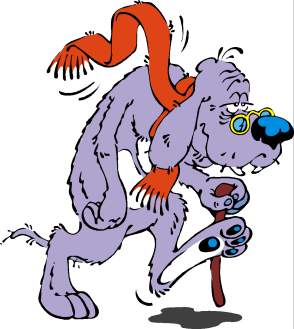 Everything hurts.
I have aching joints. I feel like I'm about 80 years old. My knees stab, sting, and ache, my shoulders throb, and my neck can't be placed into any comfortable position. Is this why people hate getting in shape?
What if I've deteriorated all my cartilage in my months of lying in bed? What if my whole body aches the rest of my life? Why did my doctors let me do this?
This is just not okay. Once other parts of my body hurt more than the bit that's severely malfunctioning, something is not okay. System overload.
I apologize for the depressing nature of this post.
photo credit: http://www.thecamreport.com/images/arthritis.jpg
Saturday, September 12, 2009
Pursuing Happiness - An Open Letter to Congress

Dear Sir/Madam,
I am writing to express my support for President Barack Obama's health care bill.
I have spent the past nine months on bed rest due to a low back injury. I am twenty years old. My recovery has forced me to drop out of college, which has left me dependent on my parents. After my father's company was sold, he was left unemployed, and my family began our health insurance extension granted by California's COBRA law.
However, once my COBRA insurance runs out, I am on my own, most likely refused independent health insurance under the guise of a pre-existing condition. That will prevent me from getting the necessary care I need to heal.
My insurance discourages long-lasting treatments like physical therapy, allowing me only twelve visits each year. Contrastingly, a spinal fusion would be easily approved, an intense operation viewed as a "quick fix" for my relatively minor injury. Instead of caring for me with less invasive therapies, my insurance company would take the easy way out, and leave a previously healthy young woman with fused vertebrae.
I do not know what I will do when my insurance runs out. If I have to, I will use my allotted college funds to pay for health care, because I won't be able to get coverage in later years without a job worthy of a college graduate. It seems illogical – and unfair – that an injury would affect my life in this way.
I would like to believe that this is only a small part of myself. I would like to believe that I would one day get out of bed and become a positive, participating member of society. I would like to believe that I, too, can live the healthy, happy life this country promises.
I urge our elected representatives to weigh the consequences of not reforming health care at the soonest possible moment. As our president reminded us Wednesday evening, "the politically safe move would be... to defer reform one more year, or one more election, or one more term." But we cannot wait. The nation cannot wait. I cannot wait.
In the concluding paragraph of the Declaration of Independence, our Framers pledged to each other their lives, their fortunes, and their sacred honor. It is time that our citizens again rise to that challenge, working together to build a stronger society. Hold onto the self-evident truth that we have certain inalienable rights - to live without pain, to conquer an illness, and to have the physical ability to pursue happiness.
(Author's Note: Organizing for America has requested that we write letters to the editor in support of Mr. Obama's bill. That request inspired this letter. Yes, it has been submitted.)
photo credit: http://www.space-rockets.com/photo/congress.jpg
Saturday, September 5, 2009
Pushing the Envelope
 I overdid it at PT on Thursday, and now I'm feeling it. Trial and error is an unavoidable part of physical therapy - it's how you find your limits - but pushing the envelope too far results in flare-ups of varying degrees.
There's a line between playing it safe and working too hard, and it has to be walked to gain strength without damaging the body. My PT refers to this as "hurts so good," and loves when it happens to me because it means I'm letting go of my fear. The downside is the "hurts so bad" days afterward.
The ironic part of this is that the workout I accomplished Thursday would be a joke to me three years ago. How perfect. Now I get to imagine all the "hurts so bad" days it will take to get back to my former strength.
If you're wondering: yeah, it is totally worth it.
photo credit: http://www.istockphoto.com/file_thumbview_approve/5261377/2/istockphoto_5261377_blank_message_card_with_brown_envelope.jpg
Monday, August 31, 2009
Killing Time

Bed rest is far less satisfying than it sounds. Though I'm constantly resting, the fact that I need to stay in bed is not comforting, and therefore it is difficult to relax. In my former life, I wished for a year where I could lie around and do nothing. Be careful what you wish for, right?
The condemning factor in bed rest is that there's not very much one can do while lying flat on the back. Reading, sewing, yo-yos, cards, board games, drawing, and a host of other activities are out, and I don't nap. I suppose that if I had felt a passion for drawing, I could have found a way, but holding a pad straight in the air doesn't sound like the most enjoyable pastime. Writing (via typing) eats up some hours, but holding up the arms to type has proven difficult, so I write in small occasional spurts. Thus, I'm left with movies and TV, which, while entertaining, are extraordinarily uninteresting after a year. I think it was once I started watching "Beverly Hills 90210" that I realized I was in over my head.
Many people reference the movie "Frida" when they hear about my predicament, and I have to remind them that during her years of bed rest, Frida Kahlo was sitting straight up, which allowed her to paint fairly easily.
Also, she was one of the greatest painters of the twentieth century, so she might have had a bit more drive to paint than I.
photo credit: http://blogs.wcuquad.com/wp-content/uploads/2009/05/relax.jpg
Wednesday, August 26, 2009
Surgical Trauma
 Surgery is the back patient's last resort. Doctors say that an operation is necessary if you can't live with your pain level any longer, or if it is preventing you from living your life. What they don't tell you is that, sometimes, surgery doesn't change that.
I picked a microdiscetcomy because I had been limping straight for eight months. I was housebound, worried about taking too much time off and losing my health insurance when my status changed from "full-time student" to "medical leave". And I thought that keeping one part of my spine compromised would damage another part, causing a chain reaction that would leave me a cripple.
Yes, I tend towards the melodramatic. But I also believed I had waited long enough for something to work.
My surgeon told me that a successful surgery would result in a disappearance of sciatica from my right leg. However a week post-op, as I weaned myself off Vicodin, sciatica appeared in my left leg. I immediately drew all sorts of fatalistic conclusions, which were generally scoffed at as hysterical. Nine months and three cortisone injections later, both my legs are sciatic, and my surgeons are baffled.
Yesterday I rode a stationary bike next to a girl my age. She has a bulging disc, and is contemplating surgery. After our conversation, I thought more critically about what I had said, and I wished I had voiced a more forceful opposition to an operation. I should have said that one's lowest points are relative to what could happen down the road - and that the phrase "the last resort" really means the last thing you should ever try.
photo credit: http://www.surgery.wustl.edu/uploadedImages/Surgery/Surgical_Areas/mis_08_laparoscopic-surgery.jpg
Thursday, August 20, 2009
Fright
I rode a reclining bicycle for ten minutes today.
 My PT is pushing me a bit lately. That's good, because I'm building strength and confidence, but I still have a residual, radiating fear of movement. My prior PT worked within a philosophy that included locking the spine in a neutral position, and while this is effective in the short term - particularly after surgical trauma - it has become ingrained in my muscles and mind, preventing me from recovering fully.
My former personality was such that I threw myself into things passionately and deliberately. However, having spent a year literally holding myself together, I approach life with an entirely new attitude that includes both ergonomic precision and tight fear. The latter is something I don't understand, because it is an emotion I have never let in. Now, though, I doubt myself. It is a difficult instinct to overcome.
But, today I rode a reclined bicycle for ten minutes. Cool.
photo credit: http://www.thedeafblog.co.uk/Bionic%20eye.jpg
 My PT is pushing me a bit lately. That's good, because I'm building strength and confidence, but I still have a residual, radiating fear of movement. My prior PT worked within a philosophy that included locking the spine in a neutral position, and while this is effective in the short term - particularly after surgical trauma - it has become ingrained in my muscles and mind, preventing me from recovering fully.
My former personality was such that I threw myself into things passionately and deliberately. However, having spent a year literally holding myself together, I approach life with an entirely new attitude that includes both ergonomic precision and tight fear. The latter is something I don't understand, because it is an emotion I have never let in. Now, though, I doubt myself. It is a difficult instinct to overcome.
But, today I rode a reclined bicycle for ten minutes. Cool.
photo credit: http://www.thedeafblog.co.uk/Bionic%20eye.jpg
Tuesday, August 18, 2009
A Tail of Sport
At ten years old, I attended my first basketball practice. My mother forced me to go, an action I don't think she regrets but one that definitely shaped our lives. I wore white Keds, which work well while dancing in parade routines but not so much when running on shiny gym floors. Despite that, I still challenged myself to outrun every other girl there. I succeeded.
I played basketball for the next eight seasons, eventually becoming a center and using my dance training to become the team rebounder (cause that involves a lot of jumping, you non-sport-inclined folks out there). Playing in the post requires either a large, tall body to push people out of the way and grab missed shots or a truckload of perseverance and major hops (that is, an ability to jump). Large people will throw their smaller opponents to the ground in the quest for rebound greatness - which brings me back around to my spine.
 When one falls on the bum, the last bone in the spine will feel most of the impact. That is the coccyx, better known as the tailbone. It is the last remnants of a tail shrunk by evolution. The trauma of a fall is absorbed by the coccyx, causing it to bend upward into the pelvic floor (a group of muscles at the bottom of the pelvis). The coccyx is a tiny bone, particularly relative to the sacrum and lumbar vertebrae. It is possibly the size of the index finger, if that. Yet repeated trauma and pressure on the coccyx can cause it to bend in any direction and get stuck there, like a wagging tail stuck in glue. That in turn pulls the lumbar-sacral region, causing nerve pain and/or strain on the vertebrae and discs.
The sheer number of times I have fallen on my butt when I was playing ball is daunting now in retrospect. I always bounced right back into the game, but adrenaline is a powerful drug, and among its many abilities is to function as a transitory painkiller. My osteopaths find my tailbone intriguing - and classic - because I haven't fallen since my senior year in high school and yet here I am with a displaced coccyx and crazy lower back problems.
The coccyx is a rather insignificant bone, but it is common knowledge that the spine functions as an entity rather than as individual parts. My history clearly shows that I was an active person with potential for mild exercise trauma, which in cumulative form could become injurious.
My question is, why on earth did my spine surgeons not check for this? It seems logical to me that before cutting into someone's spine - which would seem the second-least understood part of the body, after the brain - you should check the health of the entire thing to make sure everything is a-okay.
But that's just me. In the meantime, I can relive my glory days in the uniform, and wonder why I thought all my aches and pains were completely benign. Maybe it's because I was seventeen years old - or maybe it's because the only evidence of trauma was hidden in my two-inch long reminder of a tail.
photo credit: http://graphics8.nytimes.com/images/2007/08/01/health/adam/19464.jpg
I played basketball for the next eight seasons, eventually becoming a center and using my dance training to become the team rebounder (cause that involves a lot of jumping, you non-sport-inclined folks out there). Playing in the post requires either a large, tall body to push people out of the way and grab missed shots or a truckload of perseverance and major hops (that is, an ability to jump). Large people will throw their smaller opponents to the ground in the quest for rebound greatness - which brings me back around to my spine.
 When one falls on the bum, the last bone in the spine will feel most of the impact. That is the coccyx, better known as the tailbone. It is the last remnants of a tail shrunk by evolution. The trauma of a fall is absorbed by the coccyx, causing it to bend upward into the pelvic floor (a group of muscles at the bottom of the pelvis). The coccyx is a tiny bone, particularly relative to the sacrum and lumbar vertebrae. It is possibly the size of the index finger, if that. Yet repeated trauma and pressure on the coccyx can cause it to bend in any direction and get stuck there, like a wagging tail stuck in glue. That in turn pulls the lumbar-sacral region, causing nerve pain and/or strain on the vertebrae and discs.
The sheer number of times I have fallen on my butt when I was playing ball is daunting now in retrospect. I always bounced right back into the game, but adrenaline is a powerful drug, and among its many abilities is to function as a transitory painkiller. My osteopaths find my tailbone intriguing - and classic - because I haven't fallen since my senior year in high school and yet here I am with a displaced coccyx and crazy lower back problems.
The coccyx is a rather insignificant bone, but it is common knowledge that the spine functions as an entity rather than as individual parts. My history clearly shows that I was an active person with potential for mild exercise trauma, which in cumulative form could become injurious.
My question is, why on earth did my spine surgeons not check for this? It seems logical to me that before cutting into someone's spine - which would seem the second-least understood part of the body, after the brain - you should check the health of the entire thing to make sure everything is a-okay.
But that's just me. In the meantime, I can relive my glory days in the uniform, and wonder why I thought all my aches and pains were completely benign. Maybe it's because I was seventeen years old - or maybe it's because the only evidence of trauma was hidden in my two-inch long reminder of a tail.
photo credit: http://graphics8.nytimes.com/images/2007/08/01/health/adam/19464.jpg
Saturday, August 15, 2009
Gait Training
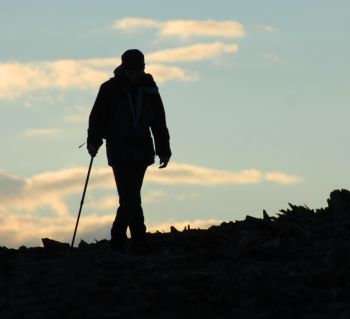
The days are getting shorter.
Bed rest has caused me to really notice the lengthening and shortening of the days. For the first time ever, I associate solstices and time changes with emotions rather than notes on my calendar.
Post-op, my physical therapist assigned me to take three walks each day, starting at 15 minutes and working my way up. Over time, I've arrived at 35 minutes per walk. It's tough to get three walks in each day - to space them far enough apart so that I'm not injured, but close enough that the light doesn't run out on me. During the winter, I could never fit in three walks by sunset. I spent every night walking the streets, looking forward to spring so that I could walk without four layers and a flashlight.
I walk religiously, and meticulously. Early on my PT declared my gait was totally wrong, and we spent the better part of February and March perfecting it. I graduated from my stiff, lumbar-pulling march to a glut-powered stride that is both ergonomically correct and energy efficient. Changing my gait eliminated all hip pain and a significant amount of sciatica, and I thus I am extremely proud of it. I also use it as evidence that sometimes the little things add up.
Walking is oddly liberating, and I think I took it for granted before surgery (meaning, all my life). I used to find walks and hikes decidedly boring, but now that my strolls are essentially choreographed, it seems easier. I may even go so far as to say that my walks are the highlights of my day.
However, I will not mourn their loss when I reclaim running as my chief form of exercise.
photo credit: http://www.biosphere-expeditions.org/images/stories/tasters/walk.jpg
Tuesday, August 11, 2009
Sciatic Pain
 sciatica: pain along the course of a sciatic nerve especially in the back of the thigh; broadly, pain in the lower back, buttocks, hips, or adjacent parts.
(source: Merriam Webster Online Dictionary)
Now, to a more exact and helpful description...
Sciatica is an indescribable symptom. It is so variant and so painful that when you go to a doctor's office, they have to use a list of sensations used to describe it that is 10+ words long, none of which actually describe what you are feeling. Words like "burning", "shooting", "aching", and "stinging" all carry a specific connotation which can only describe part of what is felt. I have found that phrases like "as if an electric wire that is running down the back of my leg suddenly went haywire" work better.
So if your doctor asks you to describe exactly your sciatica feels like, remember that it feels different to every person. You could try to summarize the pain with the words provided on your intake form, or, if you are feeling particularly annoyed with the length of time you spent sitting in their painful waiting room chairs, just pinch the back of the doctor's thigh as hard as you can. Then say, "It feels like that."
photo credit: http://www.therapads.com/images/back1.jpg
Friday, August 7, 2009
Contact Points
 My father hates chiropractors, so I never thought I would end up in one's office. Since my childhood I've heard nothing but tales of woe detailing crippled health nuts, tortured into certain chair rest by a psychopathic manipulator. But a few weeks ago we were contacted by an old pal of my parents who has a spine history similar to mine. He recommended a chiropractor friend of his who practices Network Spinal Analysis, a technique centered around increasing spinal cord flexibility. The theory is that if a disc is bulging or herniated, the spinal cord would have room to move around the bump. This would then result in less nerve pain. I'm a big fan of flexibility in general, and the treatment is supposed to be super gentle and painless. So I was all for a soiree into uncharted waters.
This is my first move into seriously "alternative" treatments. Far from being accepted by HMOs and surgeons, NSA (yup...) is so obscure that the doctors at UCSF's Integrative Medicine Center haven't even heard of this thing. Up until now, everything I've done has been generally accepted by free-thinking medical practitioners.
(It should be noted that I live in an ex-hippie settlement of a city, so perhaps things like osteopathy and psychoanalysis are less obscure here than in other areas. But I've generally resisted ideas that are far "out there" (pun intended).)
Perhaps that wasn't such a bad policy.
The treatment itself wasn't that exciting - it essentially involved her pressuring certain "contact points" to stretch the spinal cord. It felt like I was in middle school being poked by individuals who think they're funny. I felt unusually relaxed, though - atypical of my middle school experiences.
However, it was afterwards that the cracks really started to show. It was almost like a facade broke down on the woman. She started having oddly timed laughing fits, and qualifying her faith in the treatment, and making hyperbolic conclusions about my personality and physical problems despite having known me a total of 45 minutes. It confused me, because I was completely on board with the treatment plan until she went around the bend. I stared at her thinking, "Wow, lady. What are you on?"
She told me stories about "normal" NSA clinics, where up to 100 people are treated at a time. A doctor roams between patients, poking them for a bit, then moving on and letting their bodies absorb the stimulation of the "contact points." Apparently, NSA can release unknown emotion tensions, and in a group setting psych experiences are had en masse. "I know, it's really trippy and weird, huh! It totally works though. But I bet you think it's weird. I do."
Um. What??
As I left, she said, "If you come back, I'll be really surprised!" Like it was a joke.
Excuse me. If you are going to mess with my severely malfunctioning spine, I want you to have complete confidence that what you do is awesome and will help me. Period.
I am torn now, because I am on board with her Plan but I am not on board with her. If I were to take my own advice, I always tell people that if you don't trust a doctor, you should find a new one. But it's really awkward now since she practically dared me not to come back. I mean, how do I respond to that? Seriously.
Conclusions: Network Spinal Analysis might yield some benefits. Dr. Trippy, however, scares me. I will not be returning.
photo credit: https://www.positivehealth.com/images-original/dbimg/thomas112.jpg
Thursday, August 6, 2009
Confessions of an Invalid
I'm twenty years old and I've been on bed rest for the past nine months.

My back pain started when I was seventeen, and it has progressed through a dull ache to raging sciatica and everything in between. I pushed through the pain for three years, telling myself that a teenager doesn't have serious back problems. Later, I faced a plethora of doctors and a definitive MRI and slowly woke up to reality. When I could no longer live with my burning leg, I went under the knife for a simple surgery that promised a two-week recovery and a six-week hiatus on my daily runs. However my body had other plans.
I'm at a crossroads now, because Western medicine has nothing left to offer me save more radical, more painful surgeries. I'm not interested in spinal fusions, so I am turning to the unknown and the unaccepted. I will document my experiences here for posterity's sake, and so that, maybe, someone out there will find knowledge that can help them.
I always wanted someone who could relate to what I am going through, a younger person who's body failed them as mine did me. I wanted to hear opinions on treatments and learn new ways to kill time, hear survival stories and know that there is hope. That's why I'm writing a blog. Some of this will be reports on current treatments; some will be memories of my convalescence; some will be revelations and tidbits and stories about what I do all day as my body debates whether I've done enough to start living again. I hope that all of it is interesting and informative, and if I'm lucky (and not too conceited), inspiring.
If you're out there, don't lose hope. If someone can recover from cancer to win the Tour de France, or swim the Olympics with a prosthetic leg, or surf with one arm, anything is possible.
The best of health to you, and me. These are Confessions of an Invalid.
photo credit: http://latinainstitute.files.wordpress.com/2008/11/hospital-bed1.jpg

My back pain started when I was seventeen, and it has progressed through a dull ache to raging sciatica and everything in between. I pushed through the pain for three years, telling myself that a teenager doesn't have serious back problems. Later, I faced a plethora of doctors and a definitive MRI and slowly woke up to reality. When I could no longer live with my burning leg, I went under the knife for a simple surgery that promised a two-week recovery and a six-week hiatus on my daily runs. However my body had other plans.
I'm at a crossroads now, because Western medicine has nothing left to offer me save more radical, more painful surgeries. I'm not interested in spinal fusions, so I am turning to the unknown and the unaccepted. I will document my experiences here for posterity's sake, and so that, maybe, someone out there will find knowledge that can help them.
I always wanted someone who could relate to what I am going through, a younger person who's body failed them as mine did me. I wanted to hear opinions on treatments and learn new ways to kill time, hear survival stories and know that there is hope. That's why I'm writing a blog. Some of this will be reports on current treatments; some will be memories of my convalescence; some will be revelations and tidbits and stories about what I do all day as my body debates whether I've done enough to start living again. I hope that all of it is interesting and informative, and if I'm lucky (and not too conceited), inspiring.
If you're out there, don't lose hope. If someone can recover from cancer to win the Tour de France, or swim the Olympics with a prosthetic leg, or surf with one arm, anything is possible.
The best of health to you, and me. These are Confessions of an Invalid.
photo credit: http://latinainstitute.files.wordpress.com/2008/11/hospital-bed1.jpg
Subscribe to:
Posts (Atom)
